
Everything You Think You Know About History Is Wrong: New Archaeological Evidence Is Exposing the Real Truth
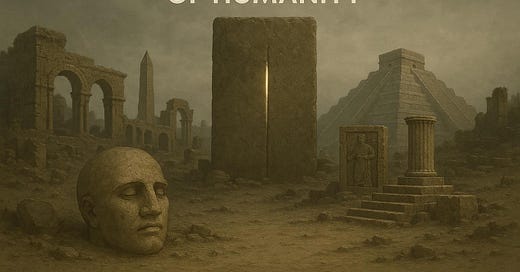
The Real Story of Ancient Civilizations Revealed by Modern Science

For years, most of us have lived with a simple idea of human history. Textbooks present it as a straight road, a steady march from primitive beginnings to modern achievements. But step inside any serious archaeological discussion today, and that picture collapses almost instantly. The truth is bigger, messier, older, and far more surprising than anyone expected two or three decades ago.
Modern science has done something extraordinary. It has given us tools to uncover evidence that the ancient world tried to hide, or simply forgot. Bones now tell us where people came from, what they ate, how they lived, and even what diseases shaped them. Soil samples reveal trade routes long before written records. Satellite imaging uncovers lost cities under jungle canopies. DNA sequencing rewrites migration maps. And advanced dating techniques push timelines further and further back.
History is shifting beneath our feet, and the change is dramatic. What we thought we knew was only the outline of a much deeper story.
This
article breaks down the biggest discoveries and what they mean. It
explains why so many of our old beliefs were wrong, what the new
evidence shows, and how these revelations reshape our understanding of
ancient civilizations. And if you want the full breakdown with
references and expanded cases, I’ve explored it on my site here:
https://www.thehistoricalinsights.page/2025/11/history-was-wrong-hidden-past-new-discoveries.html
The Old Story vs. the New Evidence
For decades, schools taught a predictable version of human development. A simple ladder:
• hunter-gatherers
• early farmers
• small villages
• kingdoms
• empires
• the modern world
It’s an easy model to teach. But as more evidence comes in, it becomes clear that this timeline is not just oversimplified — it is fundamentally inaccurate.
Human progress did not follow a clean upward curve. Instead, it followed a wave pattern: growth, collapse, recovery, reinvention. Civilizations flourished, vanished, and sometimes reappeared with different identities. Technologies emerged in one region, disappeared for centuries, then resurfaced somewhere else.
Some cultures reached extraordinary heights only to lose everything. Others developed knowledge long before regions we usually credit. And occasionally, we find evidence so out of place that it forces historians to rethink entire timelines.
Every major civilization supported a complex system of art, science, agriculture, and engineering. But their achievements have been unevenly preserved. Stone monuments survive. Wooden structures do not. Written texts survive only if they were copied again and again.
This means the civilizations we know best are sometimes the ones that simply left behind the most durable materials. Not necessarily the most advanced.
The Problem of Survival Bias
Survival bias is one of the biggest reasons our understanding of ancient history is distorted.
Stone lasts. Clay tablets endure. But wood, leather, fabrics, bamboo, and many early writing materials vanish quickly. Entire cultures can disappear without a trace if their buildings were made from perishable materials.
Imagine if our own digital world collapsed and future archaeologists found only the things made of stone or metal. They might assume the modern world was not technologically advanced at all, simply because silicon chips, servers, smartphones, and books had decayed.
This is exactly what happened to countless ancient cultures.
Many sophisticated societies built in clay, mud, or wood. Their temples, libraries, and houses are gone. Their writing systems vanished. Their inventions went undocumented. What remains is only a fraction of their world.
New discoveries are helping us fill these gaps, but the missing pieces still control much of the narrative.
Ancient Engineering Was Far More Advanced Than Expected
One of the clearest examples of underestimated ancient skill is the Antikythera mechanism. Found in a Greek shipwreck, it’s a two-thousand-year-old analog computer capable of predicting eclipses and tracking planetary cycles. For decades, historians assumed it was a unique object — but new research suggests it was part of a larger tradition of mechanical knowledge.
Similar surprises appear across other civilizations. In South Asia, the Indus Valley built massive water systems and city grids with precision that still impresses engineers today. In Mesoamerica, Maya astronomers tracked celestial movements with near-modern accuracy. In the Middle East, early metallurgists created alloys so advanced that some techniques were lost for centuries.
We thought early societies had simple tools. Instead, they had specialized craftsmen, skilled engineers, mathematicians, and astronomers.
Many inventions we considered modern — including irrigation systems, urban planning, complex rituals, long-distance communication, and accounting — already existed in sophisticated forms thousands of years ago.
Trade Networks Connected the Ancient World Long Before Expected
The idea that ancient civilizations were isolated is another myth collapsing under new evidence. Archaeological finds show objects traveling thousands of miles long before large empires rose.
A bead made in India finds its way to Egypt. A carved seal from Mesopotamia ends up in Central Asia. Copper from the Mediterranean reaches Northern Europe. Traded spices and minerals appear in places once thought unreachable.
These discoveries reveal something important: the ancient world was not a series of isolated kingdoms. It was a connected landscape of traders, travelers, explorers, and migrants.
People moved ideas the same way they moved goods. Architecture styles spread. Religious symbols traveled. Technologies were adopted and modified. The modern idea of globalization may be newer, but the instinct behind it is as old as humanity.
Lost Cities Are Appearing Everywhere
Satellite LiDAR has changed archaeology forever. By sending laser pulses through vegetation, researchers can now see the outlines of cities hidden under dense forests.
Entire kingdoms have been discovered this way.
Mesoamerican ruins that once looked like isolated temples are now known to be part of massive urban networks. Southeast Asia holds entire cities buried under jungle. Middle Eastern landscapes hide forgotten irrigation systems and population centers that once supported tens of thousands of people.
In many cases, these cities do not appear in written history at all. That means there were civilizations large enough to build monumental structures but small or unstable enough to vanish without leaving durable records.
Modern technology is allowing us to see the scale of human settlement in ways impossible even 20 years ago.
Civilizations Rose and Fell With Climate
Climate change played a central role in shaping ancient history, and the evidence for this is getting stronger each year.
Periods of drought caused cities to collapse. Shifts in monsoon patterns forced migrations. Sudden volcanic eruptions reshaped entire regions. Environmental stress often preceded political breakdown, leaving behind abandoned cities and forgotten traditions.
This explains why so many societies seemed to vanish suddenly. They did not lack intelligence or strength. They faced environmental disasters too large for their infrastructure to survive.
Human resilience has always been tested by nature. And in many cases, nature won.
Ancient Writing Systems Still Hide Secrets
The world still contains undeciphered scripts. The Indus script is the most famous example: hundreds of inscribed seals, tablets, and fragments exist, but no one knows what they mean. Without a bilingual reference or longer texts, decoding it remains difficult.
Other lost scripts include:
• the Rongorongo of Easter Island
• the Linear A script of ancient Crete
• South Arabian inscriptions
• early Amazonian symbols
• proto-writing in prehistoric Europe
Each script represents an entire worldview, an entire cultural identity. When a script vanishes, so do its stories, its values, its myths, and its science.
Modern technology helps, but some scripts may never be fully understood. Not because we lack intelligence, but because time erased too much context.
Hunter-Gatherer Societies Were Not “Primitive”
Another misconception collapsing under new evidence is the stereotype of prehistoric people as simple or unintelligent. Studies show that early hunter-gatherer societies were resourceful, socially complex, and highly adaptive.
They built sophisticated tools, controlled fire, managed ecosystems, developed symbolic art, and navigated vast landscapes. They created ceremonial structures and believed in cosmology long before agriculture began.
Some early groups traveled tens of thousands of kilometers, spreading knowledge as they moved. Others maintained long-term trade networks. Still others built stone monuments whose purpose is still debated.
Human intelligence did not suddenly appear with agriculture. It existed from the beginning.
Dynasties and Empires Wrote Biased Histories
It’s important to understand that much of written history was produced by elites. The people who wrote chronicles often worked for kings, courts, temples, or conquerors. Their job was to record what their patrons wanted remembered.
This created huge distortions. Victors looked heroic. Rivals looked weak or immoral. Lost kingdoms were erased. Rituals were rewritten. Many stories were crafted not to preserve truth but to preserve power.
Modern archaeology helps correct this bias. When evidence contradicts ancient texts, archaeologists trust the evidence. And the more evidence we uncover, the more we recognize how much political agendas shaped early “history.”
In many cases, what we think of as history is actually propaganda polished over centuries.
The Biggest Question: How Much Did We Lose?
This is the hardest part of modern archaeology. Every discovery opens new questions, but some questions will never be answered. Not because we lack tools, but because time erased too much.
We do not know how many civilizations existed.
We do not know how many scripts vanished.
We do not know how many technologies were lost.
We do not know how many migrations left no trace.
We do not know what knowledge ancient people considered sacred, secret, or ordinary.
The deeper we dig, the more we realize that ancient humanity was as complex, intelligent, and curious as we are — but their world was fragile, and so was their memory.
Why This Matters Today
It matters because it changes how we view ourselves. If history is not a straight progression, but a cycle, then our modern achievements are not the peak of humanity. They are simply the latest chapter. Civilizations rise and fall. Knowledge grows and disappears. Nature shakes societies in ways that feel sudden but are part of longer patterns.
Understanding ancient complexity helps us understand our present vulnerabilities. It helps us respect the intelligence of early cultures. It reminds us that progress is not guaranteed, and that humanity is much older and more interconnected than we once believed.
Most importantly, it shows that the story of our species is still unfolding — and still surprising us.
Want the full expanded research with links and breakdown?
I’ve posted a complete extended analysis on my site here:
https://www.thehistoricalinsights.page/2025/11/history-was-wrong-hidden-past-new-discoveries.html


.jpg)


Comments