
his-story, written wrong?
Another example: we do not KNOW how old we are...
The World’s Oldest Mummies Have Been Found in an Unexpected Part of the World
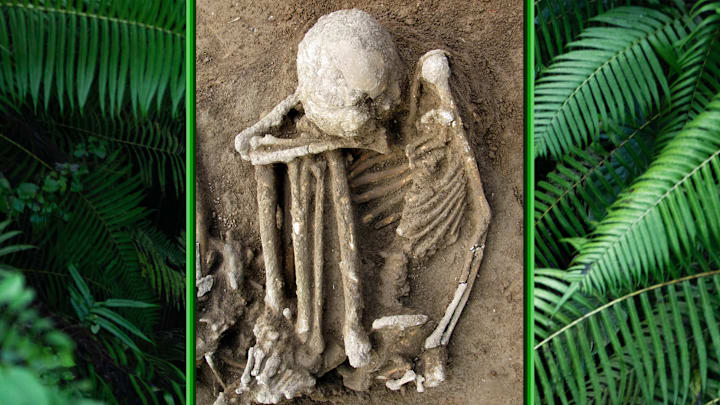
When we think of mummies, we usually think of ancient Egypt: From about 2600 BCE until the 7th century CE, Egyptians used elaborate rituals to preserve the bodies of elites and buried them in gold-filled tombs.
But the practice of artificially preserving bodies shows up in archaeological records around the world. Now, a new study suggests that mummification dates back much earlier, to some of the first human civilizations in Southeast Asia—and may present a connection between ancient peoples separated by oceans.
Where There’s Smoke, There Are Mummies
Researchers from the Australian National University and other institutions used advanced techniques, including X-ray diffraction, to examine 54 sets of remains from China, Indonesia, and other areas in southeastern Asia dating from 12,000 to 4000 BCE. Their study, published in the Proceedings of the National Academy of Sciences, shows that the bodies probably underwent an intentional process of smoke-drying over fire, a method of mummification.
While there are some earlier possible examples of intentional mummification, archaeologists generally point to the Chinchorro culture, in what is modern-day Peru and Chile, as the first civilization to ritualistically preserve human bodies. The Chinchorro started mummifying their dead around 5000 BCE.
The new research examined artifacts from the Neolithic, or late Stone Age, which saw the first human settlements, and indicates that the practice of mummification is even older than the Chinchorro. “These patterns represent a coherent and intentional framework for treating the dead,” the researchers write, “embedded in belief systems that possibly date back” at least 10,000 years.


.jpg)


Comments